
There’s so much more to pesto than you might think! While pasta dishes are the most common way to use pesto, it is far more versatile than that. This guide covers what it is, practical tips for cooking with it, and a long list of ways to put it to work—from hot dishes like pizza, baked salmon, and grilled cheese to cold uses like sandwiches, dips, and crostini.
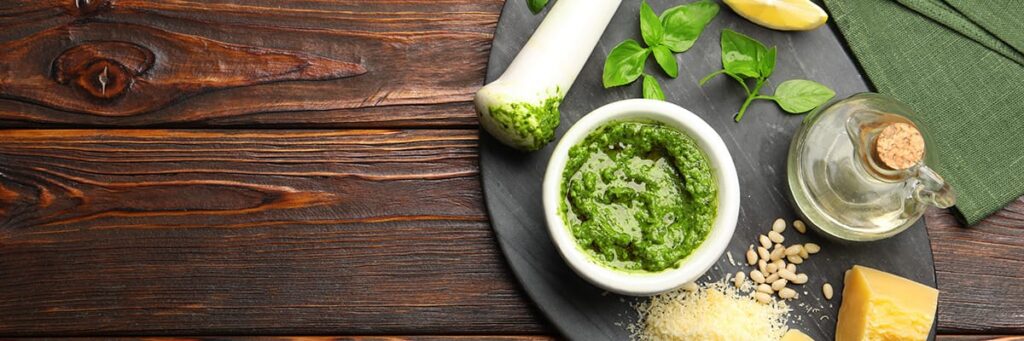
Pesto is an Italian sauce from Genova, in the Liguria region of northwestern Italy. The name comes from the Genovese word “pestâ,” meaning “to pound” or “to crush,” which is exactly how it was traditionally made.
Classic and traditional pesto consists of seven key ingredients:
You can make a similar recipe at home with the same seven ingredients. Just put them all into a food processor and blend until smooth. You can even swap the pine nuts for walnuts, almonds, cashews, or pistachios and swap the basil for arugula, kale, or parsley.
Or you can take advantage of ready-to-use Spice World Pesto! This jarred version blends pine nuts and cashews with basil, sunflower oil, salt, extra-virgin olive oil, Parmigiano-Reggiano, and garlic. It has no added preservatives, is non-GMO, kosher, and a product of Italy.
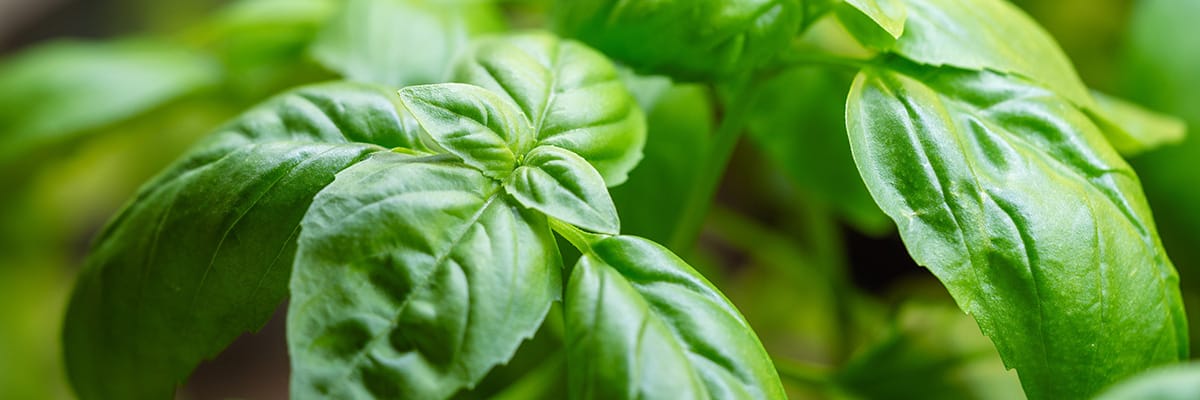
Basil is the herb traditionally used to make pesto, which is the finished sauce. To create the classic topping, the basil is blended with nuts, cheese, garlic, olive oil, and salt.
| Basil | Pesto | |
|---|---|---|
| Form | Single fresh (or dried) herb | Finished blended sauce |
| Ingredients | 1 | 6 or more |
| Primary use | Flavoring agent added to dishes | Ready-to-spoon sauce |
| Flavor | Sweet, peppery, anise-like | Herbaceous, nutty, savory, garlicky |
| Storage | Fresh: about 1 week refrigerated | Homemade: 3–5 days refrigerated; opened store-bought: 1–2 weeks |
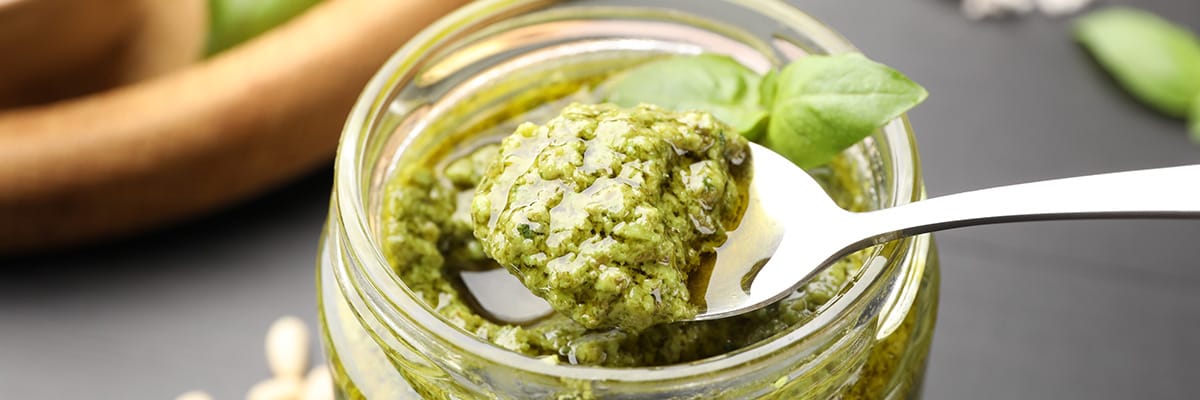
Pesto is a calorie-dense ingredient, and most of those calories come from fat, since olive oil, nuts, and cheese are all fat-rich. According to USDA FoodData Central, ready-to-serve pesto averages roughly 418 calories per 100 grams.
Here’s the breakdown for 1 tablespoon of Spice World Pesto:
| Spice World Pesto (1 Tbsp) | Amount |
|---|---|
| Calories | 90 |
| Total fat | 9 grams |
| Sodium | 140 milligrams |
| Total carbohydrate | 1 gram |
| Protein | 0 grams |

Is pesto vegan? Traditionally, it is not vegan because it contains Parmigiano-Reggiano and often pecorino, both of which are dairy cheeses.
Is pesto vegetarian? Mostly, but traditional Parmigiano-Reggiano and pecorino are made with animal rennet under EU Protected Designation of Origin (PDO) rules, so some vegetarians choose to avoid pesto.
Is pesto gluten-free? Yes, traditional pesto is gluten-free because none of the seven core ingredients contain wheat. Commercial versions can vary though. Some include additives or carry cross-contamination risk in production, so always check the label if gluten is a concern.
Spice World Pesto includes raw cashew nuts, pine nuts, and milk protein, so keep that in mind before consuming if you have sensitive allergies.
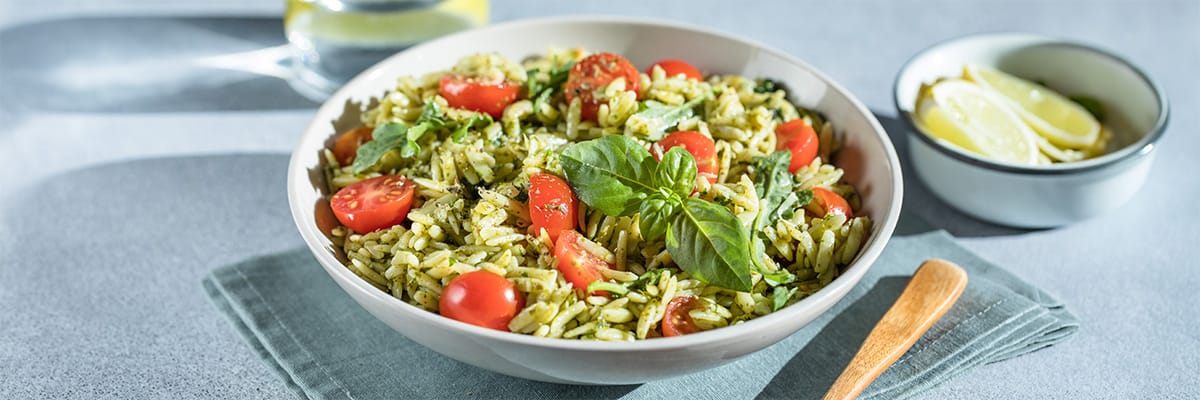
Pesto’s bright, herbaceous flavor works beautifully as a creamy, savory sauce on a variety of dishes beyond pasta nights—which is why it earns a spot in the fridge.
Tips for Cooking With Pesto
Here are a few quick tips to keep pesto tasting fresh and delicious:
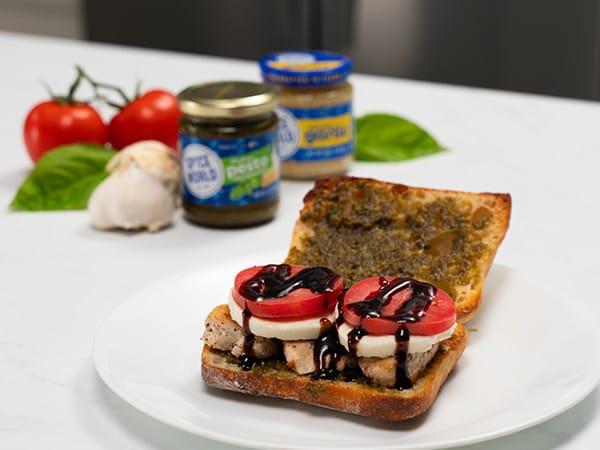
For this sandwich, grilled chicken is layered with fresh mozzarella, ripe tomatoes, Spice World Pesto, and Spice World Minced Garlic on toasted ciabatta and then drizzled with a balsamic glaze. The recipe serves two and is ready in 30 minutes.
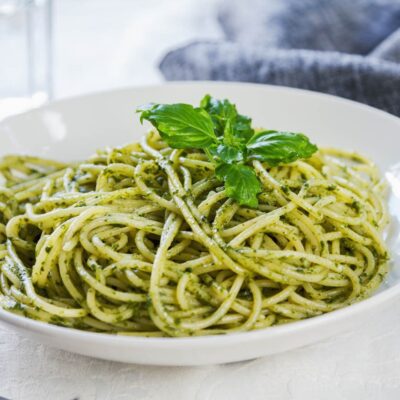
Pasta tossed with Spice World Pesto, Spice World Easy Onion, olive oil, and Parmesan makes for a quick recipe that comes together in about 20 minutes.

The topping for this creamy, herby, unique appetizer—made with Spice World Pesto, avocado, cream cheese, and lemon—is spooned onto crostini and finished with cherry tomatoes.
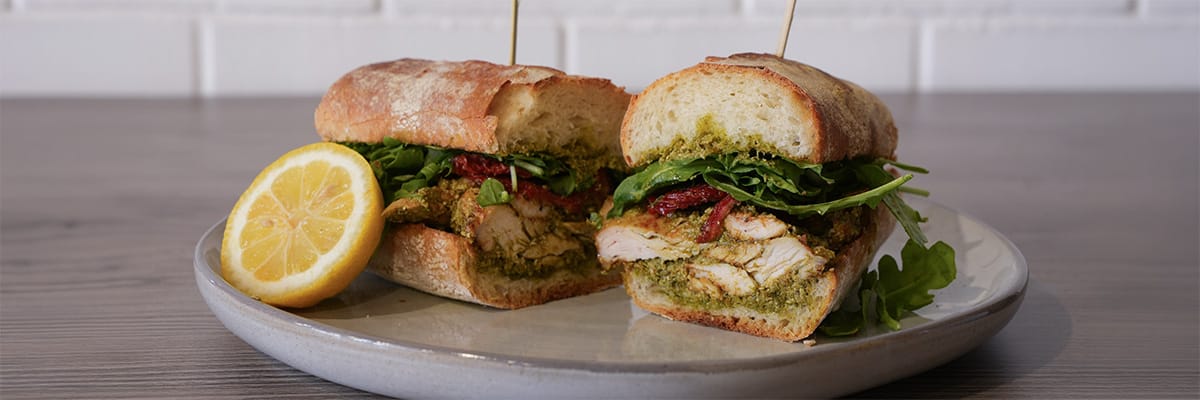
Pesto is a versatile ingredient that holds its own on pasta and earns a spot in the fridge for many other yummy uses. Try it on a sandwich, swirl it into eggs, or spread it on homemade pizza dough before adding the cheese. Looking for more delicious pesto discoveries? Find ideas on our website at Spice World Inc.
Pesto tastes bright, herbaceous, and savory. Fresh basil delivers an herbal, slightly peppery base. Pine nuts add buttery richness. Parmesan brings salty, umami depth. Garlic adds a sharp kick, and extra-virgin olive oil ties it together with a fruity finish.
Yes, pesto freezes well for longer-term storage. The most popular method is to spoon it into ice-cube trays, freeze until solid, then transfer the cubes to a freezer bag for portion-friendly use. Frozen pesto keeps for up to three months, and a thin layer of olive oil on top before freezing helps protect the color. For everyday use, refrigeration is the simpler choice.